
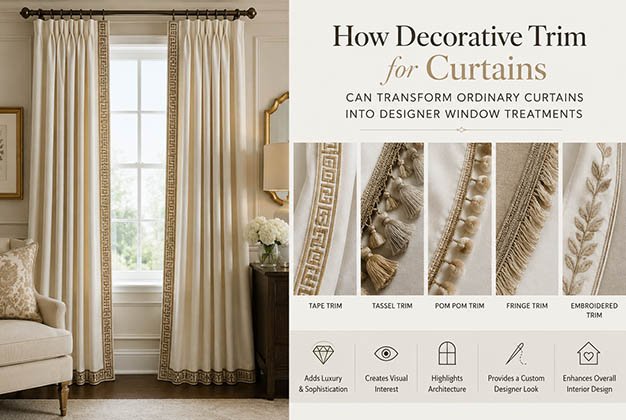
How Decorative Trim Can Transform Ordinary Curtains into Designer Window Treatments
Introduction
When it comes to interior design, even the smallest details can make a remarkable difference. Many homeowners spend significant time choosing the perfect curtains, yet overlook one powerful design element that can instantly elevate their space: decorative trim for curtains.
Decorative trim has long been a favorite tool among interior designers because it adds sophistication, personality, and a custom-made appearance to ordinary window treatments. Whether you are decorating a modern apartment, a traditional family home, or a luxurious living space, the right trim can transform basic curtains into stunning designer window treatments.
In this guide, we’ll explore how decorative trim works, why it matters, and how you can use it to create elegant and personalized interiors.
What Is Decorative Trim for Curtains?
Decorative trim refers to ornamental fabric accents added to curtains and drapery panels. These trims are designed to enhance visual appeal while creating a more refined and customized look.
Popular types of decorative trim include:
- Tape trim
- Tassel trim
- Fringe trim
- Pom-pom trim
- Beaded trim
- Embroidered trim
- Braid trim
- Fretwork trim
- Greek key trim
These decorative details can be applied along curtain edges, hems, leading edges, tiebacks, or valances to create a distinctive designer finish.
Why Decorative Trim Makes Such a Big Difference
Many people underestimate how much visual impact trim can have on a room. Interior designers often use decorative trim because it helps create a polished, intentional design rather than a standard off-the-shelf appearance.
Adds Luxury and Sophistication
One of the biggest benefits of decorative trim for curtains is its ability to instantly make window treatments look more luxurious. Even simple linen or cotton curtains can appear custom-designed when paired with the right trim.
Creates Visual Interest
Large curtain panels can sometimes look flat or uninspiring. Decorative trim introduces texture, contrast, and dimension, helping window treatments become a focal point within the room.
Highlights Architectural Features
Beautiful windows deserve attention. Trim helps frame the window and draw the eye toward architectural elements that might otherwise go unnoticed.
Provides a Custom Designer Look
Custom drapery is often associated with high-end interior design. Decorative trim offers a cost-effective way to achieve that custom appearance without replacing your existing curtains.
The Most Popular Decorative Trim Styles for Curtains
Tape Trim
Tape trim is one of the most versatile options available. It features decorative woven patterns and can be applied vertically or horizontally on curtain panels.
This style works particularly well in:
- Contemporary homes
- Transitional interiors
- Coastal-inspired spaces
- Luxury living rooms
Tassel Trim
Tassel trim adds elegance and movement. It is often used in formal dining rooms, traditional interiors, and luxury spaces where a sophisticated aesthetic is desired.
Fretwork Trim
Fretwork trim has become increasingly popular in modern interior design. Its geometric patterns provide a clean and structured appearance that complements both classic and contemporary décor.
Fringe Trim
Fringe trim introduces texture and softness while creating visual depth. It works beautifully in bedrooms, sitting rooms, and formal spaces.
Embroidered Trim
For homeowners seeking a truly unique look, embroidered trim adds artistry and craftsmanship that instantly elevates window treatments.
How to Choose the Right Decorative Trim for Curtains
Not every trim works with every curtain style. Choosing the right option requires considering several factors.
Match Your Interior Design Style
Different trims complement different décor styles.
Modern Interiors
- Simple geometric tape trims
- Clean lines
- Neutral colors
Traditional Interiors
- Tassels
- Fringe
- Decorative braids
Luxury Interiors
- Metallic accents
- Velvet trims
- Designer tape trims
Farmhouse Interiors
- Natural textures
- Subtle woven trims
- Soft neutral tones
Consider Color Contrast
A contrasting trim can make curtains stand out dramatically, while a matching trim creates a more subtle and sophisticated appearance.
For example:
- White curtains with navy trim
- Beige curtains with black trim
- Gray curtains with gold trim
- Linen curtains with natural woven trim
Focus on Scale
The trim should complement the size of the curtain and the room itself. Oversized trims can overwhelm small windows, while narrow trims may disappear on large drapery panels.
Rooms That Benefit Most from Decorative Curtain Trim
Living Rooms
The living room often serves as the focal point of the home. Decorative trim helps create a polished and inviting atmosphere while enhancing the overall design scheme.
Bedrooms
Adding decorative trim to bedroom curtains creates a luxurious hotel-inspired aesthetic while making the space feel more personalized.
Dining Rooms
Formal dining rooms benefit from elegant trims that add sophistication and visual richness.
Home Offices
Decorative trim can elevate a home office by creating a more refined and professional environment.
Why Interior Designers Frequently Use Decorative Trim
Professional designers understand that exceptional interiors are built through thoughtful details. Decorative trim is one of the simplest ways to create a layered and cohesive design.
Benefits designers appreciate include:
- Increased customization
- Better coordination with furniture and accessories
- Enhanced visual balance
- Greater design flexibility
- Elevated perceived value
These advantages explain why decorative trim remains a staple in high-end interior design projects.
Decorative Trim Trends Homeowners Love
Several decorative trim trends continue to gain popularity:
Bold Contrast Borders
High-contrast trim creates dramatic and eye-catching window treatments.
Natural Textures
Organic woven trims complement today’s growing preference for natural materials.
Geometric Patterns
Fretwork and Greek key trims remain popular because they combine timeless elegance with contemporary appeal.
Layered Window Treatments
Many designers now combine decorative trim with layered drapery systems to create depth and sophistication.
Is Decorative Trim Worth the Investment?
Absolutely.
Compared to replacing curtains entirely, adding decorative trim is a relatively affordable upgrade that can dramatically improve the appearance of a room.
Benefits include:
- Enhanced aesthetics
- Increased customization
- Higher perceived value
- Cost-effective transformation
- Timeless designer appeal
For homeowners looking to refresh their interiors without undertaking major renovations, decorative trim represents one of the smartest design investments available.
Final Thoughts
Decorative trim may seem like a small design detail, but its impact can be extraordinary. By incorporating decorative trim for curtains, homeowners can transform ordinary window treatments into elegant designer features that enhance the beauty and sophistication of any room.
Whether you prefer classic tassels, modern fretwork, luxurious embroidered accents, or contemporary tape trims, the right decorative trim allows you to personalize your space and achieve a custom-designed look that reflects your unique style.
If you’re looking to elevate your curtains and create truly memorable interiors, decorative trim is a simple yet powerful design solution that delivers impressive results.

Leave a Reply
You must be logged in to post a comment.